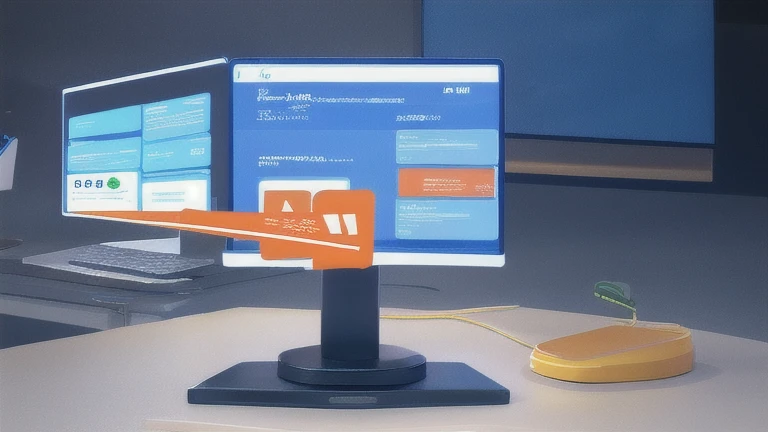
One of the most common computer display issues occurs when your PC monitor shows a “No Signal” message. You may press the power button on your computer and see the fans spinning and lights turning on, yet the monitor remains blank with a message saying there is no input signal.
This problem can be confusing because it is not always clear whether the issue comes from the monitor, cables, graphics card, or internal PC components. In many cases, the monitor simply cannot detect a video signal from the computer.
In this guide, we will explain the common symptoms of a monitor showing “No Signal”, who usually encounters this issue, the main causes behind it, and practical solutions to fix the problem. By following these steps, you can often restore your display quickly.
Symptoms of a Monitor Showing “No Signal”
When a PC monitor cannot detect a signal from the computer, several noticeable symptoms may occur. Identifying these symptoms can help determine the root cause of the issue.
- The monitor displays a “No Signal” or “No Input Signal” message
- The computer powers on but the screen stays black
- The monitor automatically enters sleep mode
- PC fans and lights are running but nothing appears on the screen
- The startup sound plays but the display does not appear
- The monitor repeatedly searches for an input signal
These symptoms indicate that the monitor is not receiving a video signal from the computer.
Who Is Most Likely to Experience This Problem
The “No Signal” monitor problem can happen to many computer users, but it tends to occur more frequently in certain situations.
- Desktop PC users
- People who recently upgraded their graphics card
- Users who moved their computer to a new location
- People connecting a new monitor
- Custom PC builders
Hardware upgrades, system movement, and cable changes can often cause temporary connection problems that result in the monitor not detecting a signal.
Main Causes of the “No Signal” Monitor Problem
1 Loose or Damaged Display Cable
The most common cause of a monitor showing “No Signal” is a loose or damaged display cable. Modern monitors typically connect using HDMI, DisplayPort, DVI, or VGA cables.
If the cable is not securely connected or if it is damaged internally, the monitor cannot receive the video signal from the computer.
2 Incorrect Monitor Input Source
Most monitors support multiple input ports such as HDMI, DisplayPort, and DVI. If the monitor is set to the wrong input source, it will not display the signal from the connected device.
For example, if your PC is connected via HDMI but the monitor is set to DisplayPort, the screen will show “No Signal.”
3 Graphics Card Problems
The graphics card (GPU) is responsible for generating and sending video signals to the monitor. If the graphics card is not functioning correctly, the monitor may not receive any signal.
Common GPU-related issues include:
- Improper installation of the graphics card
- Loose PCIe connection
- Missing GPU power connectors
- Hardware failure of the graphics card
4 RAM or Memory Issues
Faulty or improperly installed RAM modules can prevent the system from completing the boot process. When this happens, the PC may appear to turn on but fail to output any display signal.
Some motherboards may produce beep codes indicating a memory error.
5 Monitor Hardware Failure
In some cases, the monitor itself may be the source of the problem. Internal power supply issues or display controller failures can prevent the monitor from showing the incoming signal.
How to Fix a PC Monitor Showing “No Signal”
1 Check the Display Cable
Start by checking the cable connecting your computer to the monitor. Make sure it is securely plugged in on both ends.
- HDMI cable
- DisplayPort cable
- DVI cable
- VGA cable
If possible, try using another cable to determine whether the original cable is defective.
2 Verify the Monitor Input Source
Use the monitor’s menu buttons to open the display settings and confirm that the correct input source is selected.
If your computer is connected via HDMI, make sure the monitor is set to HDMI input.
3 Inspect the Graphics Card
Turn off the computer and open the PC case to check the graphics card installation.
Ensure that the GPU is firmly inserted into the PCIe slot and that all required power cables are connected.
4 Reseat the RAM Modules
Memory problems can also cause a monitor to show no signal. Remove the RAM modules and reinstall them carefully to ensure proper contact.
Cleaning dust from the memory slots can also help improve stability.
5 Test with Another Monitor
To determine whether the monitor is defective, try connecting your computer to another monitor or even a television.
If the second display works properly, the original monitor may need repair or replacement.
Conclusion
If your PC monitor displays a “No Signal” message, the problem is usually related to display cables, monitor input settings, graphics card issues, memory problems, or monitor hardware failure.
To troubleshoot the issue effectively, follow these steps:
- Check and reconnect display cables
- Confirm the correct monitor input source
- Inspect the graphics card installation
- Reseat RAM modules
- Test the system with another monitor
By carefully examining each possible cause, you can often resolve the “No Signal” problem and restore your computer’s display without requiring professional repair.

コメント